
The Story Behind the South’s “Haint Blue” Porch Ceilings
Drive through the historic districts of Charleston or Savannah, down the quiet backroads of the Georgia countryside, or past the graceful townhouses of New Orleans, and you’ll see it. A soft, ethereal blue paints the ceiling of porch after porch. It’s not quite sky blue, not quite robin’s egg, and not quite mint. It’s a pale, milky, watery shade that seems to hold the very light of dusk.
This is Haint Blue. And it’s far more than a charming design choice—it’s a color steeped in history, folklore, and a touch of magic.
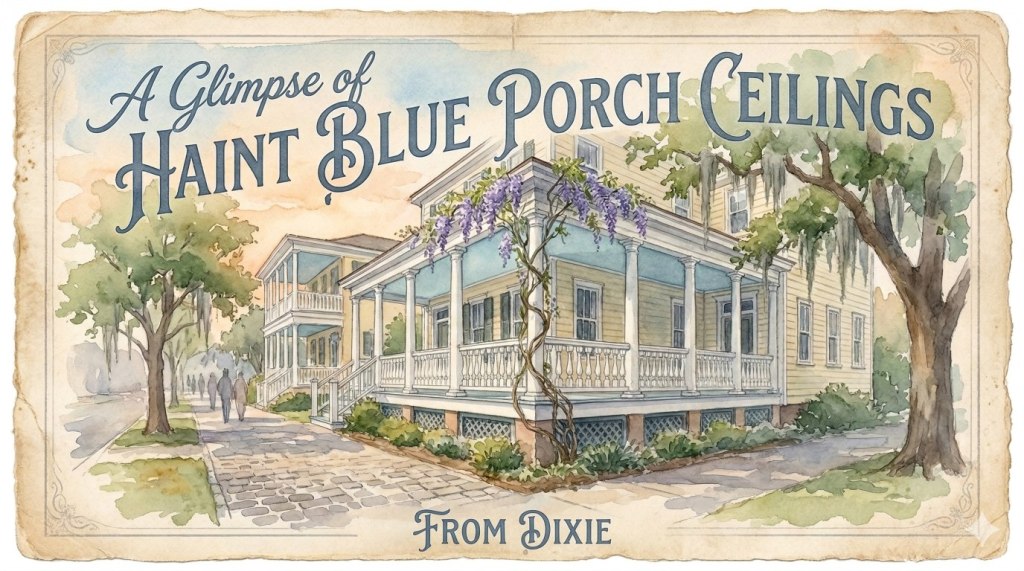
Keeping the Haints at Bay
The tradition is deeply rooted in the Gullah Geechee culture of the coastal South, descendants of enslaved West and Central Africans who preserved many of their spiritual beliefs. The word “haint” is an old Southern term for a ghost or spirit, a restless soul that means no good to the living.
These haints, the folklore goes, couldn’t cross water. They were trapped, unable to move on, and would wander, causing mischief, breathing nightmares into open windows, and bringing bad luck to a household.
The solution was a clever form of spiritual protection. That pale, watery blue on the porch ceiling was meticulously mixed to mimic the sky or, more ingeniously, a body of water. A haint, drawn to a home, would see the blue and either mistake the porch for the sky and fly up into it, becoming trapped, or believe it was a river it could not cross. Confounded, the spirit would turn away, leaving the home and its inhabitants in peace. It was a first line of defense painted right overhead.
A Practical Magic
But the magic of Haint Blue wasn’t just supernatural. It was also brilliantly practical, born of necessity and ingenuity.
- The Insect Repellent Theory: Many original Haint Blue paints were milk-based casein paints, tinted with lime, indigo, or other natural pigments. The lime content acted as a natural insect repellent. It’s also said that wasps and mud daubers would see the blue ceiling and mistake it for the sky, deciding it wasn’t a suitable place to build a nest. Whether folk wisdom or fact, the result was a porch less plagued by bugs.
- The Cooling Effect: This benefit is pure physics. Lighter colors reflect light and heat. In the sweltering Southern summer, a pale blue ceiling helped make the porch a cooler, more refreshing place to gather in the evening. It extended the living space and provided a visual, psychological coolness that felt like a respite from the oppressive heat.
A Tradition That Endures
Today, Haint Blue appears on modern homes far from the South Carolina coast. While the original fear of restless spirits has largely faded, the feeling the color evokes remains. It’s a connection to tradition, a nod to the past, and an undeniable aesthetic pleasure.
The color does something remarkable as the sun begins to set. It glows, stretching the evening light just a little bit longer. It turns the harsh midday sun into a soft, dappled radiance. It creates a sense of serene enclosure, a feeling of protected peace.
So the next time you find yourself under a Southern porch, look up. That beautiful, faded blue is a silent testament to a rich cultural history—a powerful blend of ancestral wisdom, practical ingenuity, and the timeless human desire to create a sanctuary.
It’s more than paint. It’s a story, and it’s still being told, one porch ceiling at a time.
According to a Southern Magazine that shall remain unnamed, these are all shades of Haint Blue:
Benjamin Moore
- Palladian Blue: HC-144 (The HC signifies its place in the Historical Color collection)
- Wythe Blue: HC-143
- Woodlawn Blue: HC-147
Sherwin-Williams
- Atmospheric: SW 6505
- Rainwashed: SW 6211
- Pool Blue: SW 6944
Other Brands
- Farrow & Ball Borrowed Light: No. 235
- Farrow & Ball Dix Blue: No. 82
- Olympic Niagara Falls: OL633.2
 Tuskaloosa Living